


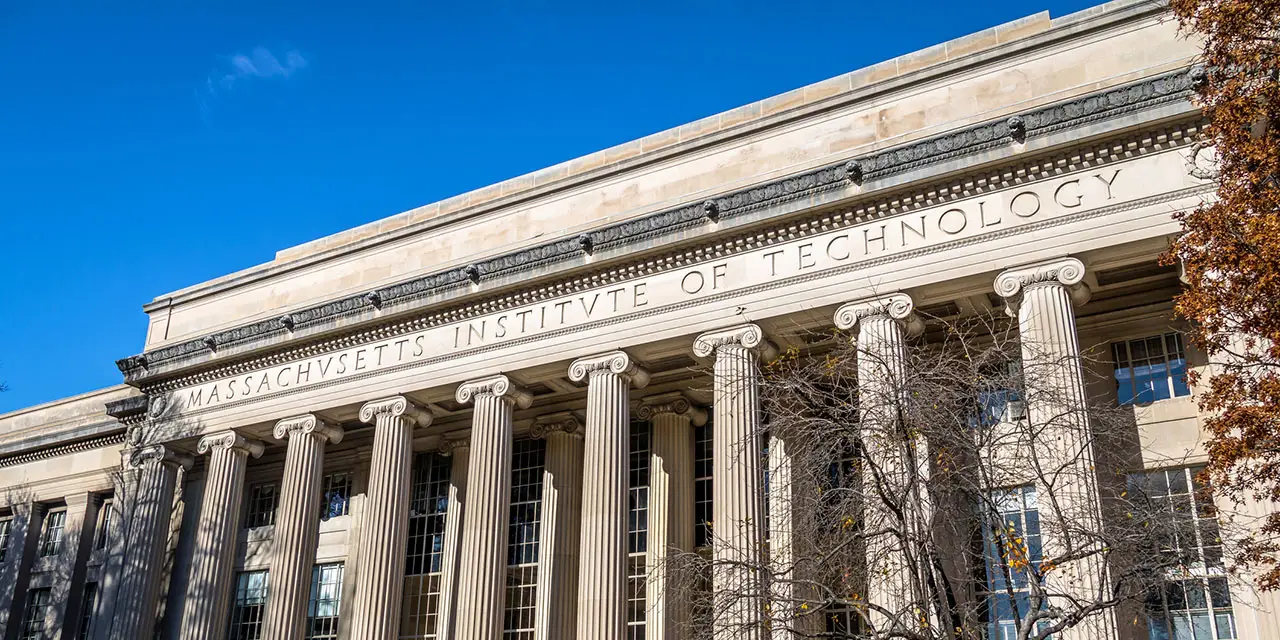
Massachusetts Institute of Technology’s No-Loan Policy
The Massachusetts Institute of Technology, or MIT, is a global symbol of innovation, research, and intellectual gravity. For many prospective students worldwide, the prospect of studying at an institution like this one is a aspiration. But the perceived cost of quality higher education all too often seems like an insurmountable barrier. It is where the groundbreaking MIT no-loan policy takes effect, radically transforming the landscape of college affordability at MIT and offering unparalleled financial access. Not so much a policy as a profound commitment to ensuring that a student’s financial situation never comes between them and an MIT education. This educational handbook will unravel the secrets of this groundbreaking method of financial aid and provide transparency to the future students and lifelong learners alike.
The MIT Financial Aid Philosophy
There is an underlying philosophy behind MIT’s approach to funding students that comes from a deep-seated conviction in fairness, access, and merit. The organization believes that talent is distributed evenly around the globe, but opportunity is not. Therefore, the financial aid mission of MIT is to bridge the gap, so that the greatest minds, regardless of their means, can chase their intellectual aspirations in Cambridge, Massachusetts. This commitment has two indispensable pillars: the need-blind, full-need pledge and the cutting-edge “no-loan” model itself.
The Need-Blind, Full-Need Commitment
One of the foundations of MIT’s financial aid policy is its commitment “need-blind, full-need” admissions policy to all first-year undergraduate students, including international students. But what does this really mean to potential students?
- Need-Blind Admissions: This implies that the financial need of a student has absolutely nothing to do with any decision-making process during admissions. When the application is viewed, the admissions committee has no idea whether or not the applicant has applied for financial aid, nor do they have any projections of his or her likely need. This ensures that every candidate will be judged solely on academic achievement, intellectual curiosity, and potential to become a member of the MIT community, without regard to cost. This commitment is crucial to backing diverse student body and mandating the practice of equal opportunity.
- Full-Need Commitment: The moment a student enrolls at MIT, the institution commits to meeting 100% of the student’s demonstrated financial need for his/her full four-year undergraduate education. This is where the concept of college affordability MIT takes its full effect. MIT’s office of student financial services makes the determination of a family’s ability to pay after a thorough examination of the family’s income, assets, and other considerations. The difference between the MIT total cost of attendance (tuition fees MIT, room, board, books, personal costs, and travel) and the calculated family contribution is considered the “need” of the student. MIT attempts to fulfill this whole need in a mix of grants, scholarships, and work opportunities for students without requiring them to take on debt. This substantial financial assistance for college ensures that admitted students can come and thrive without the burden of unmet need.
This dual pledge of need-blind admission and full demonstration of need satisfaction ensures that an MIT offer of admission is an offer of opportunity, irrespective of economic circumstance. It’s a compelling declaration about the institution’s dedication to access to education.
The Meaning of “No-Loan”
Whereas “need-blind, full-need” sets the stage, MIT’s no-loan policy is the coup de grâce when it comes to post-graduation debt. Basically, the no-loan policy is that MIT undergraduate student financial aid awards do not include institutional loans. Instead of including loans that would be repaid upon graduation, MIT replaces this component with non-repayable scholarships and grants.
This is what makes the difference. Nearly all colleges offer liberal financial aid, but their packages will typically include a “self-help” component, previously in the form of student loans. Regardless of whether the loans are subsidized or low-interest, they represent a debt that students will carry with them into the future. The MIT no-loan policy clearly works to eliminate student loans from its packages of financial aid so that students can graduate debt-free from their MIT undergraduate experience. This commitment has a profound impact on student funding options and ensures graduates are free to pursue their passions—whether research, entrepreneurship, public service, or industry—without the burdensome weight of loan repayments. This commitment makes MIT an example of a debt-free education, one that significantly reduces post-graduation loans for its graduates.
It must be pointed out that “no-loan” is not equal to MIT free tuition. Families and students are still expected to pay what they can. But the part of the cost of attendance MIT that the family cannot pay is financed by grants and work, not loans. This approach shows that MIT is devoted to multi-year student aid programs MIT, for long-term fiscal well-being.
The Funding Components
To meet its need-blind, full-need, and no-loan pledges, MIT employs a very sophisticated array of financial instruments. These are wisely put together to provide robust Massachusetts Institute of Technology financing without saddling its students with debt.
MIT Scholarships and Grants
The cornerstone of MIT’s student financial aid policy is its high level of investment in providing scholarships and education grants. These are the primary means through which the college meets the documented need of its students without demanding reimbursement.
- MIT Scholarships: These are scholarships that MIT itself offers, derived from its substantial endowment, alumni and donor charitable gifts, and institution operating funds. University scholarships of this type are not given on an academic merit basis in the traditional sense (as perhaps many outside scholarships are), but strictly on a student’s demonstrated ability to pay. That is to say, once a student is admitted, their academic qualifications have already been rewarded, and the scholarship amount is strictly tied to how much the family is able to pay for MIT’s cost of attendance. These are grants that remit non-repayable money to cover a significant portion, if not all, of a student’s remaining need after the family contribution.
- Federal and State Grants: In addition to the aid, MIT also makes federal and state grants such as the Pell Grant or Supplemental Educational Opportunity Grant (SEOG) available to qualified students. These are also non-repayable government agency-funded monies for students with exceptional financial need. MIT’s financial aid office assists in making the students available to these grants, making the most of all resources to reduce the family’s out-of-pocket expenses.
- Endowment Effect MIT: The enormous size of MIT’s endowment plays a key role in enabling its liberal financial aid practices. The majority of the endowment’s year-over-year returns fund undergraduate scholarships. This long-term planning and investment allow MIT to offer stable and substantial financial aid year in and year out, demonstrating the profound endowment effect MIT has on access to and opportunity in education. The strength of this legacy promises the long-term viability of loan-free education at MIT to future generations of students. These university scholarships and grants are necessary to maintaining financial access MIT.
Student Employment’s Role
While scholarships and grants cover a majority of the demonstrated need of a student, student employment also plays an important role as a component of the MIT financial aid package. This is not meant to be a mechanism to accumulate debt, but as a means of allowing students to work to cover their personal costs and to help fund a small portion of their education.
- Federal Work-Study Program: The majority of MIT financial aid awards have an element for the Federal Work-Study Program. Students can work part-time on campus or with participating not-for-profit agencies and earn money to help pay their education costs under this program. Work-study earnings are typically used for books, supplies, personal, and travel expenses, rather than directly for tuition fees at MIT. The work is usually flexible, enabling students to balance work and school responsibilities. They also offer valuable job experience as well as exposure.
- Campus work: Besides the formal work-study, a variety of other forms of campus work can be provided to students, such as lab research assistant positions, administrative assistants, library staff, or dining hall workers. The work offers a second source of financial income, helps students manage their own budgets, and acquires on-the-job experience in a college environment.
Including student work in financial aid packages has a number of advantages. It fosters a sense of accountability, teaches students how to learn time management, and provides a direct, non-debt path for paying toward their living expense. Foremost, these wages do not replace grants or scholarships but complement them, providing an overall plan of student financing strategies that encourages graduate without debt. This is a segment of the student aid programs MIT highlights as a holistic method of funding post-secondary education where the students significantly contribute to their own education but don’t borrow money.
Special Circumstances
The widespread use of MIT financial aid to various special circumstances in an expression of the institute’s commitment to access for all. The knowledge of the way the MIT no-loan policy is implemented with graduate students and international students is paramount to gaining a complete comprehension of Massachusetts Institute of Technology funding.
How It Applies to International Students
For the majority of foreign students, becoming eligible for aid towards university education in the US may prove particularly challenging. Nevertheless, MIT is different with a very generous policy.
- Need-Blind for All Undergraduates: Another impressive feature of MIT’s financial aid policy is that it has a “need-blind” admissions policy for all undergraduate students, regardless of whether or not they are citizens or qualify for immigration benefits. This leads to international students being treated with the same level of consideration for admission as domestic students, with financial need being an irrelevant factor in the decision to admit. This commitment to evaluating international students based only on academic merit is unusual among highly selective U.S. colleges and is a key driver of broadening access to MIT education around the world.
- Full-Need and No-Loan for International Undergraduates: International undergraduate students are also provided with the “full-need, no-loan” policy after admission. Just like their US counterparts, MIT promises to meet 100% of their demonstrated financial need through a combination of institutional grants, scholarships, and work-study. International students, thus, are also free to graduate without debts, a privilege not typically provided by other institutions. This enables the global talent pool to tap into the special resources of MIT to create a rich and vibrant learning experience. Financial access that MIT offers to international students significantly increases its reach and impact.
International applicants need to note that while financial need is not considered in the process of admissions at MIT, they must apply for financial aid as part of their admission application if they anticipate needing it. That is because, unlike domestic students, international students usually cannot get assistance after admission except if family situations change drastically. The same stringent examination of family financial circumstances obtains, ensuring equitable allocation of MIT financial assistance.
A Look at Graduate Aid
While MIT’s need-blind undergraduate no-loan policy is universally applauded, the financial aid landscape for graduate students at MIT is founded on an alternative, yet equally solid, construct. Financing higher education at the graduate level is structured differently because the nature of advanced study and research requires it.
- Departmental Funding Focus: Graduate student financial support at MIT is mostly managed and distributed through individual academic research groups and departments rather than an centralized undergraduate financial aid department. The majority of doctoral students at MIT receive substantial funding packages that often include payment of full tuition, a living allowance paid monthly, and medical insurance. This support is typically provided in exchange for teaching assistantships (TAs) or research assistantships (RAs).
- Research and Teaching Assistantships (RAs/TAs): These assistantships form the basis of graduate student support. An RA assists on a research project for a faculty member, typically one within his or her own thesis. A TA assists professors with undergraduate courses, leads sections, grades, and holds office hours. Both roles are valuable career development, position students in the academic community, and are a “loan-free education” to most Ph.D. candidates. These assistantships effectively eliminate tuition charges MIT for graduate students and provide a living stipend.
- Fellowships: The majority of graduate students also have fellowships, often merit-based, very competitive prizes. They might be from MIT itself, but also from external foundations, government agencies (like NSF Graduate Research Fellowships), or private donors. Fellowships are money given to the student directly without usually expecting work, i.e., they can completely focus on studying and research. Fellowships are essentially very selective university scholarships for master’s and Ph.D. programs.
Although the “no-loan” pledge does not apply quite so expressly to all graduate schools, the overall philosophy of MIT’s graduate financial aid is to enable highly qualified students to pursue advanced degrees without prohibitively expensive financial obstacles, especially for doctoral students where the intent is to promote academic and research distinction without the need for significant post-graduation indebtedness. This across-the-board policy of student aid programs MIT enables ongoing higher education.
Conclusion: Accessibility and Opportunity at MIT
The Massachusetts Institute of Technology no-loan policy is more than a program in financial aid; it is a firm declaration of the institution’s firm belief in merit, ability, and equitable access to world-class education. By continuing to adhere to need-blind admissions, meeting 100% of demonstrated need, and strategically crafting financial aid awards without institutional loans, MIT has set a college affordability gold standard MIT.
This innovative approach has the practical consequence of eliminating undergrad student loans so that they can aggressively pursue their lofty academic and professional goals unfettered by the suffocating specter of post-graduate debt. Supported by large MIT grants and scholarships and bolstered by the significant endowment impact MIT, together with sizable student employment opportunities, means economic circumstances are no barrier to an MIT education. In the same vein, this policy performs a similar function for foreign students, providing a truly international and diverse learning environment. While graduate support operates under a different paradigm, it also is designed to support students through assistantships and fellowships, and increasing the funding of higher education to postgraduate levels highly accessible.
MIT’s financial philosophy ensures that the most intellectually gifted and talented students, regardless of whom they are in economic terms, have access to MIT education and contribute to solving the world’s greatest problems. By taking the lead in providing loan-free education, MIT not only removes economic obstacles but also empowers its graduates to invent, create, and lead without the pressure of having to repay loans immediately. This commitment to accessibility MIT is a beacon of hope and an exemplar for higher education, making MIT a model institution for advancing opportunity for all. It actually allows students to be able to graduate debt-free, creating a future where potential only knows the limits of imagination, not the figures of their bank accounts.